


Nigeria’s federal highway programme is increasingly incorporating smart, security-focused infrastructure alongside conventional civil works, adding solar-powered lighting and surveillance systems to major road corridors.
The trend is evident in the ongoing rehabilitation of the First Niger Bridge and the Federal Government’s wider upgrade of the Abuja–Kaduna–Zaria–Kano corridor.
From Road Repairs to Infrastructure Monitoring
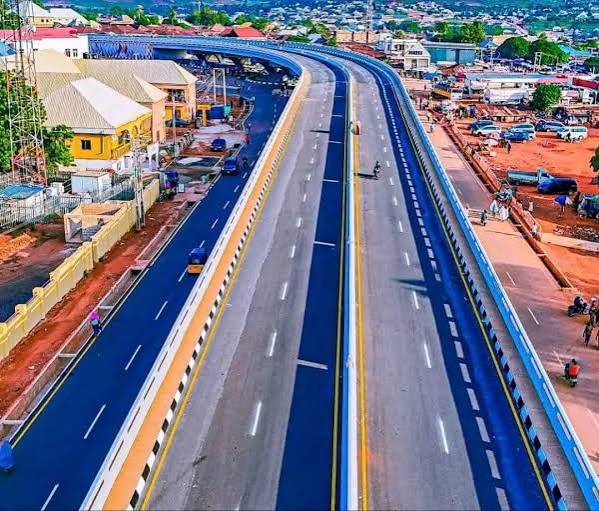
On the First Niger Bridge, the Federal Government has ordered the installation of additional solar-powered streetlights and the completion of CCTV cameras linked to the surveillance system on the Second Niger Bridge.
The measures were introduced alongside emergency rehabilitation after vandals damaged bolts, nuts, and expansion-joint components on the bridge. The government says the CCTV system will strengthen monitoring and help address future vandalism risks.
The intervention also includes replacement of damaged structural components and asphalt repairs, making the bridge rehabilitation a combination of structural maintenance, security and operational improvements.
Solar Lighting Moves Beyond the Niger Bridge
The adoption of solar lighting is also appearing on longer federal highway corridors.
According to the Federal Ministry of Works, solar-powered lighting is being introduced along the Abuja–Kaduna–Zaria–Kano route to improve night-time visibility and enhance security. The ministry says the corridor is scheduled for completion by December 2026, with 118 kilometres of Lot 1 already completed and Lot 2, covering 164 kilometres, more than 60% complete at the time of its update.
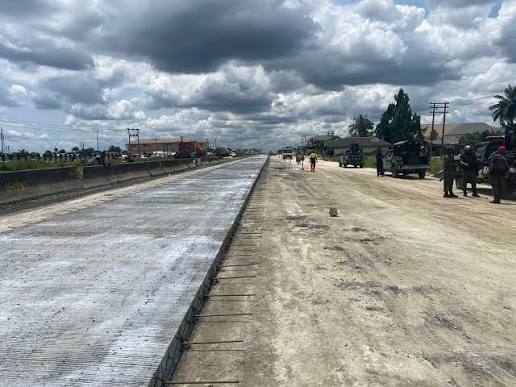
Solar lighting is also being installed across the 96-kilometre Sagamu–Ore Road, alongside sections being delivered using reinforced concrete pavement.
What It Means for the Construction Technology Market
The expansion of these systems creates a broader procurement opportunity beyond conventional road construction.
Potential areas of demand include:
Solar-powered roadway lighting systems
CCTV and video-surveillance equipment
Network and communications infrastructure
Remote monitoring and control systems
Traffic-management technology
Power-storage and renewable-energy solutions
Infrastructure security and maintenance services
For technology vendors and specialist contractors, this means road projects could increasingly contain technology and electrical-infrastructure packages alongside civil works.
Why Contractors and Suppliers Should Pay Attention
The emerging pattern is significant because security and operational technology is being incorporated directly into infrastructure interventions rather than treated entirely as a separate project.
The First Niger Bridge provides the clearest example: an emergency rehabilitation triggered by vandalism is now incorporating solar lighting and connected CCTV surveillance as part of the response. Meanwhile, solar lighting is being deployed on major long-distance highway corridors.
For the construction industry, the implication is straightforward: future federal road procurement may create more room for specialist technology providers alongside traditional civil engineering contractors.
Sources: Federal Ministry of Works; Channels Television; PUNCH. ision)
Image note: The uploaded image appears unrelated to the infrastructure story, so I would not use it as the article’s hero image.