



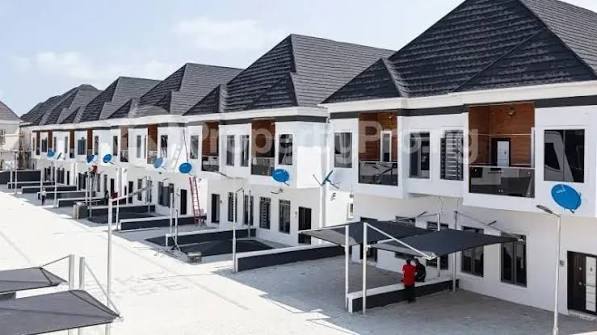
Housing Costs Rise as Developers Reassess Nigeria’s Residential Project Economics
Nigeria’s housing market is facing a widening gap between the cost of delivering residential property and the purchasing power of potential homeowners. Rising land, construction, labour, infrastructure, and financing costs are forcing developers to reassess project feasibility, pricing and delivery strategies.
Key Facts & Metrics
Land, construction materials, labour, infrastructure, financing and statutory charges are among the major cost components putting pressure on housing production.
The Ministry of Finance Incorporated Real Estate Investment Fund (MREIF) reported approximately ₦140 billion in mortgage disbursements to 2,018 families across 27 states by August 2026.
The reported MREIF mortgage structure includes a 9.75% fixed interest rate, loan tenures of up to 20 years, and a minimum 10% equity contribution.
Despite increased financing support, the cost of producing new housing remains a critical constraint for developers, particularly in markets where construction costs are rising faster than household purchasing power.
Why Housing Costs Matter to Developers
Residential development economics depend on more than the final selling price of a property.
A developer must balance:
Land acquisition + construction cost + infrastructure + statutory charges + financing cost + marketing/sales costs = total development cost.
That cost then has to be matched against the achievable market price, buyer affordability, and expected sales absorption rate.
When production costs rise, developers have several variables to reassess, including project size, specification, construction methods, financing structure, delivery timeline and target market.
What It Means for Developers
1. Project feasibility becomes more sensitive to cost movements
Higher material, labour and financing costs can increase the amount of capital required before a development generates sufficient sales revenue.
Developers therefore need closer monitoring of cost-to-complete, financing costs and projected margins throughout the construction cycle.
2. Affordability can limit price increases
Developers may face higher construction costs, but the market may not absorb equivalent increases in property prices.
This creates pressure around unit sizes, specifications, locations, payment plans and development models as developers seek to align project costs with what buyers can actually afford.
3. Access to mortgage finance becomes increasingly important
The reported ₦140 billion MREIF disbursement demonstrates the role mortgage finance can play in expanding the pool of potential homeowners.
The effectiveness of such financing for the development market will depend partly on whether mortgage availability translates into actual purchasing capacity and completed transactions across different income segments and locations.
What It Means for Contractors and Suppliers
Housing affordability pressures can eventually feed into construction procurement.
Developers under cost pressure may scrutinise:
Material specifications
Construction methods
Contractor pricing
Project duration
Procurement schedules
Labour productivity
Local versus imported inputs
Infrastructure costs
For contractors, this increases the importance of accurate cost estimation, procurement planning and cost-to-completion monitoring.
What to Watch
Construction-input prices: cement, steel, aggregates, finishes and other major materials.
Land costs: particularly in high-demand urban and peri-urban development corridors.
Financing costs: interest rates, construction finance and mortgage availability.
Mortgage disbursements: whether increased financing reaches a broader pool of prospective homeowners.
Sales absorption: how quickly completed and off-plan units are being taken up.
Rental affordability: whether rising ownership costs continue shifting housing demand toward rental accommodation.
Development models: changes in unit sizes, locations, construction specifications and financing structures as developers respond to market conditions.
Bottom Line
Nigeria’s housing challenge is increasingly a question of development economics as well as housing supply.
For developers, the central calculation is no longer simply how much a property can sell for. It is whether the total cost of development, financing requirements and delivery timeline can be reconciled with what the target market can afford.
The performance of mortgage programmes such as MREIF, alongside movements in construction and land costs, will therefore remain important indicators for Nigeria’s residential property market.
#NigeriaHousing #HousingMarketNigeria #NigeriaRealEstate #RealEstateNigeria #PropertyDevelopment #AffordableHousing #HousingAffordability #MortgageFinance #MREIF #ConstructionNigeria #ConstructionCosts #PropertyInvestment #RealEstateInvestment #BuiltEnvironment #NomarcProjects