



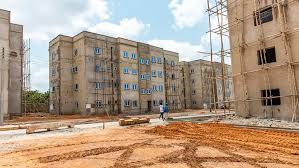
A practical procurement guide to FHFL, FHA, state housing programmes, developer partnerships, and public-sector construction opportunities.
Nigeria's institutional housing programmes create opportunities for construction companies, but access depends on more than technical competence. Contractors must understand how projects are structured, which organisation is procuring the work, what financial capacity is required, and whether the opportunity is a direct construction contract, a developer partnership, or a housing-finance arrangement.
The most practical route for a mid-scale contractor is to build a procurement strategy around three channels: direct tendering, subcontracting under established developers, and partnerships on housing projects backed by institutional finance.
This guide explains how to pursue those routes, prepare the required documentation, and avoid common procurement mistakes.
Understand the institutions and their procurement routes
Not every housing institution awards construction contracts in the same way. A contractor should first identify whether it needs to qualify as a builder, become a development partner, provide specialist works, or deliver project-management services.
A. Family Homes Funds Limited (FHFL)
Financing and delivery partnerships
FHFL provides direct debt or equity financing for qualifying affordable-housing projects. Its stated eligible partners include public- and private-sector organisations, including cooperatives, with a credible housing-delivery track record. Eligible costs include building construction, associated infrastructure, and external works. Land acquisition and third-party professional fees are generally not financed.
Best route: Approach an existing FHFL-supported developer for construction packages, or establish a credible development proposal that meets FHFL's financing criteria.
Official links: Affordable Housing Fund · FHFL website
B. Federal Housing Authority (FHA)
Direct procurement and PPPs
FHA undertakes housing development through different arrangements, including direct construction and public-private partnerships. Its official website provides separate pages for procurement adverts and partnership procedures.
Best route: Monitor direct construction tenders if you have the required financial and technical capacity. Consider the PPP route if you can contribute a credible development proposal, resources, or a qualified partnership.
Official links: Procurement adverts · Partnership steps · Ongoing projects
C. Federal and state housing programmes
Nigeria's housing delivery framework involves several institutions. The Ministry of Housing and Urban Development identifies FHA as a master developer and PPP structuring partner, FMBN as a provider of housing finance products, NMRC as a mortgage-refinancing institution, and FHFL as a participant in social and affordable housing delivery. States also have roles in housing PPPs and state-led programmes.
Best route: Identify the actual implementing agency and contracting entity for each project. A housing programme announcement does not, by itself, constitute an open construction tender.
Official starting point: Federal Ministry of Housing and Urban Development
Which route should a mid-scale contractor prioritise?
Contractor's position
Recommended entry route
Limited audited turnover or working capital
Subcontracting under an established developer
Strong technical team and completed housing projects
Direct construction tenders
Experienced contractor with a credible project proposal
FHFL-supported development partnership, subject to eligibility
Strong project controls but limited building-construction capacity
Specialist works or project-management opportunities, where qualified
Access to land, capital, and development partners
FHA or state-level PPP discussions
These are strategic recommendations, not automatic eligibility decisions. The applicable tender or financing criteria take precedence.
2. What a recent housing project reveals about the opportunity
A useful current example is the 257-unit affordable-housing estate in Masaka, Nasarawa State, for police officers and their families. FHFL and the Nigeria Police Trust Fund marked the start of construction in October 2026.
The reported delivery structure assigns different responsibilities to different participants:
FHFL facilitates housing delivery and financing.
Nigeria Police Trust Fund provides estate infrastructure.
Bricks International Concepts Limited develops the homes.
FAM Property Development and Investment Limited undertakes infrastructure works.
The project is expected to comprise two- and three-bedroom homes.
Premium Times Nigeria
+1
Read the project report in Premium Times.
The procurement lesson: Contractors do not always need to win a direct contract from FHFL to participate in institutionally financed housing. They may qualify to deliver a defined package under the developer or infrastructure contractor responsible for that component.
Potential packages include blockwork, roofing, electrical installations, plumbing, tiling, painting, estate roads, drainage, and external works. These are examples of possible work packages, not confirmed vacancies on the Masaka project.
A contractor pursuing this route should identify the responsible delivery company, demonstrate relevant experience, and request information on its supplier-registration and subcontracting procedures.
3. Qualification requirements: What contractors should prepare
There is no single universal eligibility checklist for all FHFL, FHA, and state housing projects. Requirements vary according to the procuring entity, contract size, scope, and procurement method.
Nevertheless, the following documents form a practical bid-readiness file.
Bid-readiness checklist
0/20 complete
Corporate identity
CAC certificate of incorporation and current corporate particulars
Company profile and registered business address
Relevant construction and professional registrations where required
Tax and statutory compliance
Current tax clearance certificate
Applicable pension compliance documentation
Applicable ITF and NSITF compliance certificates
Other declarations or certificates specified in the solicitation
Financial capacity
Audited financial statements for the specified years
Evidence of turnover meeting the contract threshold
Bank reference or credit-facility evidence, where required
Cash-flow forecast and working-capital plan
Technical capacity
CVs and qualifications of key personnel
Evidence of relevant completed projects
Project award and completion certificates
Plant and equipment inventory, including valid lease arrangements where accepted
Tender-specific documents
Completed technical and financial bid forms
Bill of quantities and priced schedules
Construction programme and method statement
Quality, health, safety, and environmental plans
Required affidavits, declarations, and bid security, if specified
Copy checklistReset
Use this as an internal preparation tool. It is not a substitute for the mandatory documents specified in a particular tender.
What actual tender requirements can look like
An FHA prequalification notice published in August 2026 for construction works at Gwarinpa II Estate specified an average annual turnover of ₦500 million for each listed lot. It also required three relevant completed projects within the stated five-year period, audited accounts, tax and applicable statutory compliance, evidence of financial capacity, key technical personnel, and equipment details. The notice's submission deadline was 24 August 2026, so it is an expired tender example, not an open opportunity.
Public Procurement NG
This example demonstrates why contractors must assess financial thresholds before investing time in a bid. A technically competent contractor whose turnover falls below the stated threshold may be better positioned as a subcontractor or through a properly structured partnership, provided the solicitation permits that arrangement.
4. Register for the right procurement opportunities
Bureau of Public Procurement (BPP)
Companies seeking federal government contracts should assess their need for registration in the National Database of Federal Contractors, Consultants and Service Providers.
The BPP's published guidance describes the database registration process, including corporate information, compliance records, business categories, financial information, personnel, completed jobs, and equipment. Actual tender notices determine the specific registration evidence and eligibility requirements applicable to each bid.
Bureau of Public Procurement
+1
Action: Complete the applicable registration process, select the relevant construction categories, and keep the company's records current. Do not assume registration alone qualifies the company for every federal tender.
FHA partnership route
FHA's published partnership process describes three stages:
Submit an expression of interest. Address the letter to the FHA Managing Director and describe the proposed partnership.
Follow the official application instructions. FHA's published procedure currently describes a non-refundable ₦500,000 application fee and an exploratory meeting. Verify the amount, payment instructions, and applicability directly with FHA before paying.
Complete the procurement process. FHA states that prospective partners must respond to the relevant procurement advertisement and successfully complete the process.
Partnership Steps
A partnership expression of interest is not a contract award. Contractors should budget for the process only after verifying the terms and confirming that their proposed arrangement fits the programme.
5. How to prepare a competitive housing tender
A compliant submission establishes eligibility. A competitive submission also demonstrates that the contractor understands the project and can deliver it within the contractual cost, quality, and schedule requirements.
A. Technical proposal
Your technical proposal should address:
Understanding of the drawings, specifications, site constraints, and scope of work.
Construction methodology, sequencing, and mobilisation.
Staffing plan and responsibilities of key professionals.
Material procurement and supplier arrangements.
Quality assurance and inspection procedures.
Health, safety, environmental, and regulatory compliance.
Programme milestones, reporting, and risk mitigation.
B. Commercial proposal
The commercial submission should be built from a properly measured and priced bill of quantities (BOQ), rather than an arbitrary price per housing unit.
Include:
Labour, materials, equipment, and subcontractor costs.
Site establishment and preliminaries.
Transport, storage, and material handling.
Statutory costs and applicable taxes.
Waste allowances and clearly assessed risks.
Cash-flow projections and payment milestones.
A defensible margin that accounts for execution risk.
Critical point: A profitable housing contract is not necessarily the lowest-priced contract. Underpricing can create a cash-flow crisis when material costs rise, valuations are delayed, or the contractor must finance work before payment.
C. Evidence of past performance
Build a portfolio of completed projects containing the contract scope, location, value where disclosure is permitted, completion date, photographs, and client references. Include award letters and completion certificates where available and permitted.
If your company has never completed a large institutional housing project, present relevant smaller projects honestly. A credible record of successfully delivered residential units, drainage, foundations, roofing, or finishing works is more useful than claiming experience that cannot be verified.
6. The partnership strategy for contractors below institutional thresholds
Contractors who cannot independently satisfy the financial or experience requirements of a large tender should consider three legitimate routes.
Route 1: Become a specialist subcontractor
Approach established developers and main contractors with a clearly defined service: masonry, roofing, electrical works, plumbing, painting, tiling, or external infrastructure.
Your offer should specify available labour, equipment, mobilisation time, geographical coverage, quality controls, and evidence of comparable work.
Route 2: Partner with a stronger contractor or developer
Explore a joint venture or consortium where permitted by the procurement rules. Establish each party's responsibilities, financial contributions, technical obligations, liability, payment rights, and dispute-resolution procedures in writing.
Do not assume that combining two companies automatically satisfies a tender's eligibility criteria. Check the tender's specific rules on joint bids, turnover, references, and registration.
Route 3: Join a housing development supply chain
Identify developers involved in institutional housing programmes and pitch for defined work packages. Offer measurable delivery capacity, reliable pricing, documented quality controls, and clear completion timelines.
Start with a package the business can finance and execute reliably, then use completed work and references to qualify for larger packages.
7. A practical 30-day action plan
Execution tracker
0/16 actions
Week 1: Audit readiness
Review CAC and statutory compliance documents
Compile audited accounts and bank references
Document three to five relevant completed projects
Identify financial and technical qualification gaps
Week 2: Map procurement channels
Review FHFL's affordable housing and tender pages
Check FHA procurement adverts and partnership guidance
Identify relevant state housing agencies and developers
Register for applicable federal contractor databases
Week 3: Build the commercial pipeline
Identify at least 10 credible developers or main contractors
Prepare a one-page capability statement
Send targeted partnership and subcontracting proposals
Request vendor-registration requirements and upcoming package information
Week 4: Qualify and pursue opportunities
Screen opportunities against eligibility requirements
Obtain current BOQs and tender documents where available
Prepare a compliant technical and commercial submission
Create a follow-up calendar for each qualified opportunity
Copy 30-day action plan
The objective for the first 30 days is not necessarily to win a major contract. It is to establish procurement readiness, identify genuine opportunities, and start conversations with the organisations that control the relevant work packages.
8. Opportunity-tracking framework
Maintain a simple spreadsheet with the following fields for every opportunity.
Field
What to record
Procuring organisation
FHFL, FHA, state agency, developer, or main contractor
Project and location
Name, state, housing type, and scope
Procurement route
Direct tender, subcontract, PPP, or development partnership
Published status
Open, upcoming, expired, or under verification
Financial threshold
Required turnover, contract value, and credit evidence
Technical criteria
Past projects, personnel, equipment, and specialist qualifications
Deadline
Submission date, time, and clarification deadline
Next action
Document preparation, contact, site visit, or bid submission
Commercial assessment
Estimated cost, working capital, payment terms, and risk
Source
Official advert or verifiable procurement document
Check official procurement pages regularly. For example, FHA's procurement adverts page currently lists a financial-bid invitation associated with the Renewed Hope Housing Project in Minna, with a stated deadline of 14 July 2027. Verify the current status, eligibility, and scope directly on the official page before acting.
Procurement Adverts
9. Risks contractors must manage
Unverified opportunities: Confirm that the project, procuring organisation, and advertisement are genuine.
Unaffordable application costs: Verify fees through official institutional channels before payment.
Insufficient working capital: Model the funding needed to pay labour and suppliers before receiving certified payments.
Unclear scope: Confirm drawings, BOQs, specifications, variations, and responsibility for infrastructure.
Unrealistic pricing: Account for material-price volatility, transport, taxes, and payment delays.
Weak partnership agreements: Define scope, payment, liability, dispute resolution, and exit terms before mobilisation.
False eligibility claims: Never fabricate turnover, project references, professional qualifications, or completion certificates.
A contractor should also review payment certification arrangements, retention, advance-payment provisions, performance bonds, insurance, liquidated damages, and termination clauses before signing a contract.
10. Recommended next steps for Nomarc Projects
Nomarc can turn this advisory into a practical procurement-intelligence series rather than a one-off article.
Housing Procurement Tracker: Maintain a verified register of open housing tenders, deadlines, financial thresholds, and official source documents.
Institutional Housing Developer Directory: Identify developers and main contractors involved in publicly announced housing schemes, recording only verifiable contact and project information.
Tender Readiness Toolkit: Provide downloadable checklists for corporate compliance, technical submissions, BOQs, cash-flow planning, and completed-project documentation.
Opportunity Briefs: Publish concise alerts explaining who qualifies, what work is involved, which documents are required, and when submissions close.
Contractor Capability Profiles: Give qualified contractors a structured way to present their services, geographic coverage, completed work, and available capacity to prospective partners.
These products would support Nomarc's positioning as a source of actionable construction procurement intelligence.
Editorial sources and verification
FHFL Affordable Housing Fund: financing scope, eligible partners, and application process.
FHFL tender application portal: project-management procurement reference.
FHA procurement adverts: official procurement listings.
FHA partnership steps: published partnership process.
BPP contractor-registration procedure: federal contractor database guidance.
Federal Ministry of Information: Housing PPP and joint-venture framework: policy context.
FHFL–Nigeria Police Trust Fund housing project: recent example of institutional housing delivery.