


SEO Keywords: Nigeria building materials prices, cement price in Nigeria, construction cost inflation, logistics bottlenecks, diesel costs, BOQ planning, construction industry Nigeria, sharp sand prices, POP prices, supply chain.
Nigeria's construction industry is facing another wave of cost pressure as logistics expenses increasingly replace factory production as the biggest driver of building material inflation.
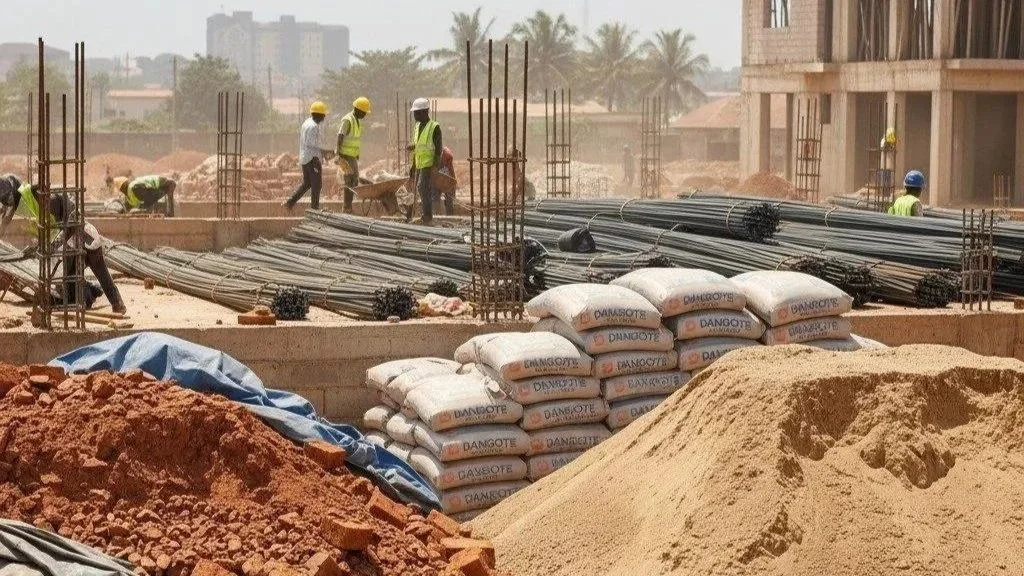
From cement and Plaster of Paris (POP) to sharp sand haulage, contractors and developers are reporting higher procurement costs as deteriorating road conditions, rising diesel prices, and distribution bottlenecks make transporting materials significantly more expensive.
Latest Building Material Price Snapshot
Recent market reports indicate fresh upward pressure across several critical construction inputs.
Material Current Market Level
Cement (50kg Up to ₦15,000
POP Around ₦9,000
Sharp Sand (large truck) Up to ₦400,000
Industry stakeholders attribute much of the increase to transportation challenges rather than manufacturing costs alone. Poor road conditions, longer delivery times, and higher fuel expenses are increasing the cost of moving materials from production centres to construction sites.
Logistics Is Becoming the Biggest Cost Multiplier
The latest pricing trend reflects a broader shift in Nigeria's construction economy, where distribution costs are now exerting greater pressure on project budgets than factory gate prices.
With diesel prices exceeding ₦2,000 per litre in many locations, haulage operators face higher operating expenses that ultimately flow through to contractors purchasing cement, aggregates, and finishing materials.
Why Contractors and Developers Should Pay Attention
The latest inflation cycle has immediate commercial implications across the construction value chain.
Contractors should consider:
Updating Bills of Quantities (BOQs) to reflect current transport costs.
Reviewing price escalation clauses in ongoing contracts.
Purchasing high-volume materials earlier where feasible.
Developers should evaluate:
Procurement timing for cement and finishing materials.
Larger contingency allowances for logistics-driven cost movements.
Supplier diversification to reduce transport risk.
Market Signal
The biggest threat to construction budgets is no longer material production alone. Logistics resilience is becoming a competitive advantage. Companies that strengthen procurement planning, optimise haulage routes, and secure reliable supplier networks will be better positioned as transport costs continue reshaping project economics across Nigeria's built environment.
Sources: The Guardian Nigeria; Reuters.
#BuildingMaterialsNigeria #ConstructionCosts #CementPriceNigeria #InfrastructureNigeria #ConstructionNews #CivilEngineering #ProjectManagement #SupplyChain #BOQ #NomarcProjects